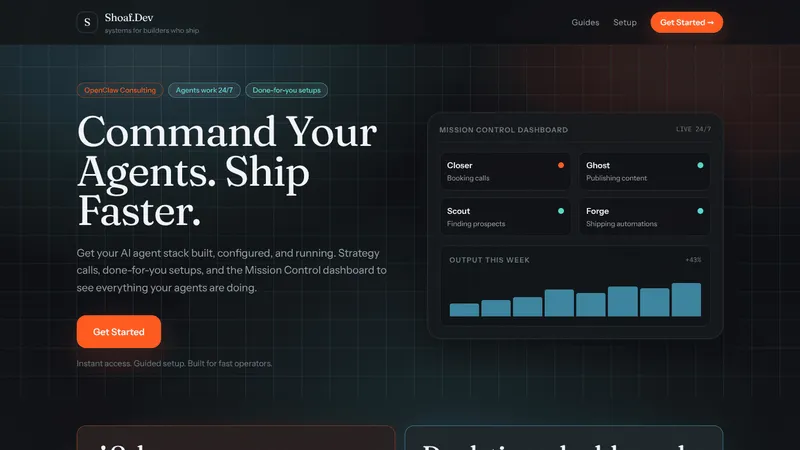
Shoaf.Dev
shoaf.dev- Good for
- Businesses, Builders
- Category
- AI Agents
- Lets you
- Get a done-for-you setup of an AI agent stack

digitalworkforcesystem.com
A framework for running persistent AI workers with memory and reusable skills on your own infrastructure.
Visit website (opens in a new tab)The Digital Workforce OS is an innovative system designed for businesses looking to optimize their operations with persistent AI employees known as Digital Workers. Unlike traditional automation tools, these AI systems not only execute tasks but also retain memory and improve over time. This framework acts as a sophisticated layer of artificial intelligence that operates on top of existing workflows, transforming them into reusable and compounding digital assets.
A Digital Worker is characterized as a persistent AI employee that functions within defined boundaries, setting it apart from simple chatbots or autonomous agents. These workers execute tasks, remember past interactions, and enhance their capabilities based on feedback. Importantly, they are designed to be owned and managed by the user, making them auditable and portable.
Persistent Memory: Unlike traditional automation which resets every run, Digital Workers maintain a continuous memory of their operations. This persistent memory allows them to build context over time, improving efficiency and decision-making.
Versioned Skills: These AI employees come with a set of skills documented in markdown format. Users have full ownership of these skills, allowing them to upgrade and reuse them across various contexts.
Execution Layer: The existing workflows are preserved and utilized as the execution layer beneath the intelligence provided by the Digital Workers. This ensures that there’s no disruption to current operations.
Auditability and Ownership: Users can track the actions of their Digital Workers through detailed logs, ensuring that every decision made is transparent and accountable.
The emphasis of the Digital Workforce OS is on creating a unique type of labor—compounding digital labor. This type of labor appreciates in value through ongoing memory retention and structured feedback mechanisms. Unlike autonomous agents that may lack reliability, Digital Workers operate within the reliable structures of ownership and defined boundaries.
Digital Workers vs. Agents: Digital Workers treat intelligence as infrastructure, building on set parameters to ensure efficiency. In contrast, autonomous agents may act independently, potentially leading to unpredictable outcomes.
Memory vs. Learning: The distinction between memory and learning is critical; memory requires the capacity to evaluate, forget, and reinforce information. Digital Workers are equipped with the ability to remember and improve, not just store large amounts of data.
Compounding Digital Labor: This concept emphasizes the additional value generated from knowledge and feedback over time. Traditional automation does not involve such memory and improvement structures.
The Digital Workforce OS is particularly advantageous for:
Organizations can gauge their readiness to integrate Digital Workers through a straightforward assessment. This quick tool helps determine whether their existing AI systems are primed for transformation into Digital Workers.
Several common inquiries arise regarding the functioning and implementation of Digital Workers:
The Digital Workforce OS represents a transformative approach to AI integration in the workforce. By allowing businesses to install and own persistent AI employees, companies can significantly enhance their operational efficiencies. This platform is ideal for those who have established workflows and are eager to leverage AI for compounded, long-term value. With features designed to enhance memory, skills, and auditability, Digital Workers stand out as more than just tools—they are intelligent, evolving assets critical for modern business success.
For organizations ready to evolve from traditional automation to a framework that advocates for ongoing improvement and learning, the Digital Workforce OS offers a comprehensive solution. Leveraging the power of compounding digital labor, businesses can create a more efficient, accountable, and robust workforce for the future.
Ready to try it? Visit digitalworkforcesystem.com (opens in a new tab)