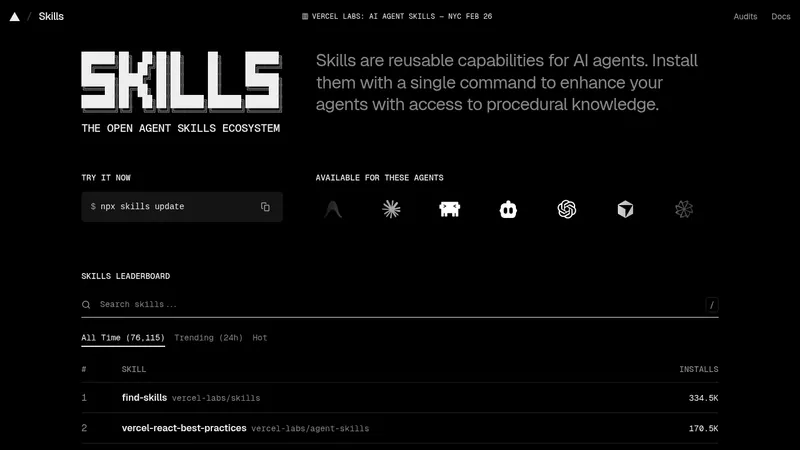
A platform for discovering and installing reusable skills that extend AI agents such as Claude Code, Cursor and Codex. Skills are added with a single command, and a leaderboard ranks skills by install counts.
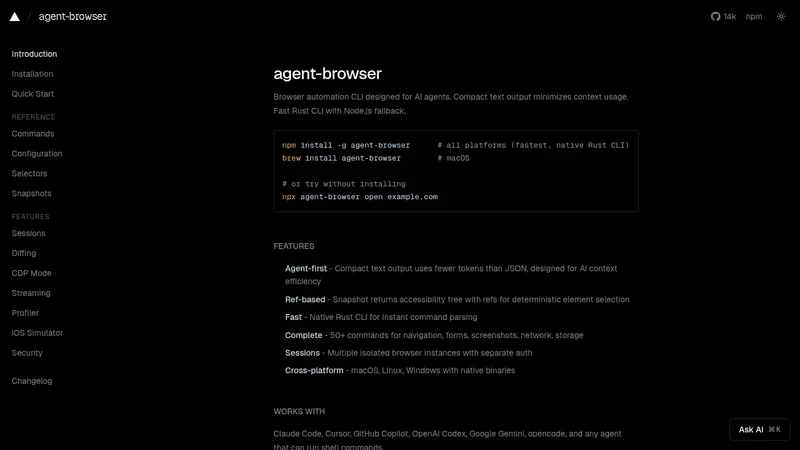
agent-browser is a command-line interface for headless browser automation, designed for AI agents. It uses a Rust CLI and a Node.js daemon that manages a Playwright browser, and outputs compact text snapshots with element references.
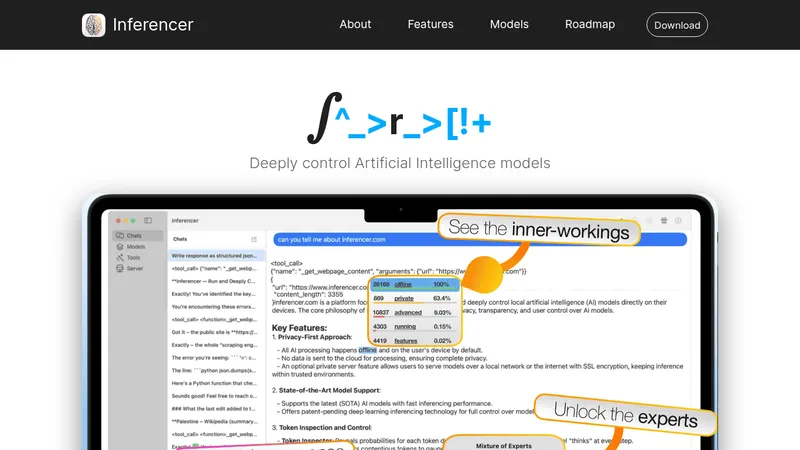
Inferencer is a platform for running AI models locally on the user's device, with tools to inspect token probabilities, serve models over a network through Ollama- and OpenAI-compatible APIs, and stream large models with memory offloading. It offers a free plan and a paid professional plan.
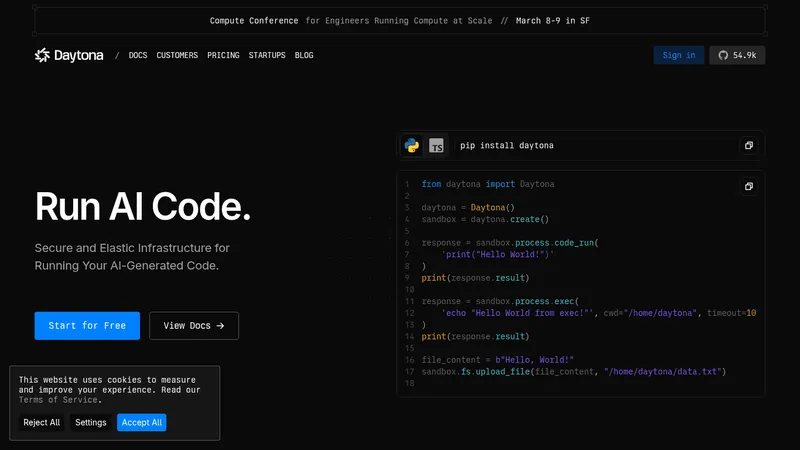
Daytona is an infrastructure platform for running AI-generated code in isolated sandbox environments. It provides programmatic APIs for executing commands, managing files, integrating with Git, and deploying virtual desktops.
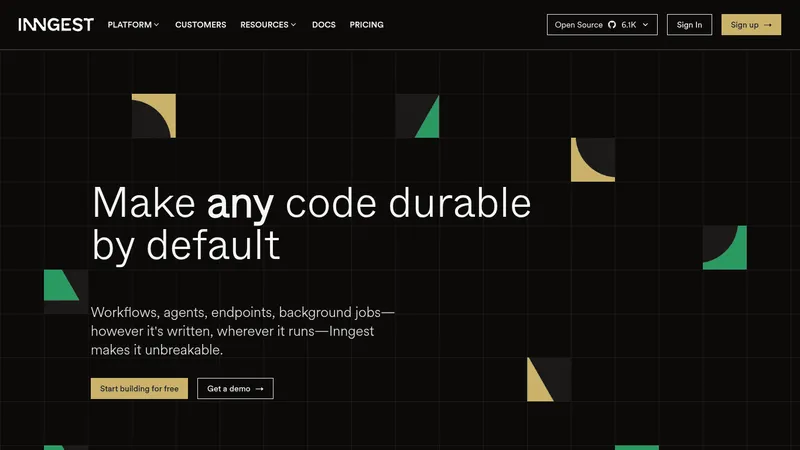
Inngest is a platform for building durable multi-step backend workflows and AI orchestration. It handles queues, state management, scheduling, retries and observability so developers can write multi-step functions that run in serverless, edge or traditional environments.
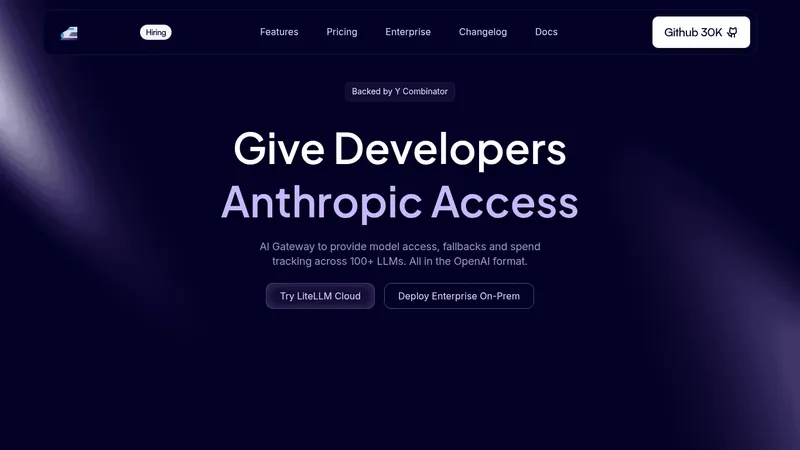
LiteLLM is an AI gateway that provides a unified, OpenAI-compatible interface to over 100 large language models. It adds spend tracking, rate limiting, fallbacks and prompt management for teams running multiple models.
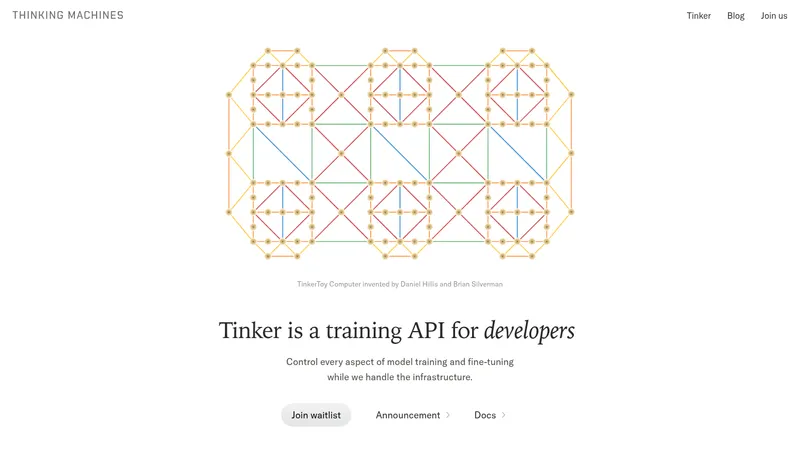
Tinker is a training API from Thinking Machines Lab for fine-tuning machine learning models, including open-source models such as Qwen, Llama, GPT-OSS and DeepSeek. It exposes functions for forward and backward passes, optimizer steps, sampling and saving training state, and uses LoRA adapters.
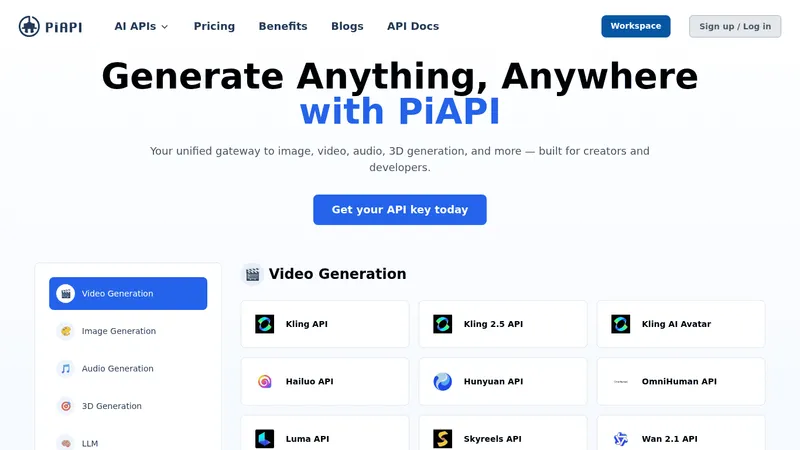
PiAPI is a hub that provides access to multiple generative AI APIs for producing video, image, audio, 3D and LLM outputs. It offers developer-oriented integration through REST endpoints and is aimed at both developers and content creators.
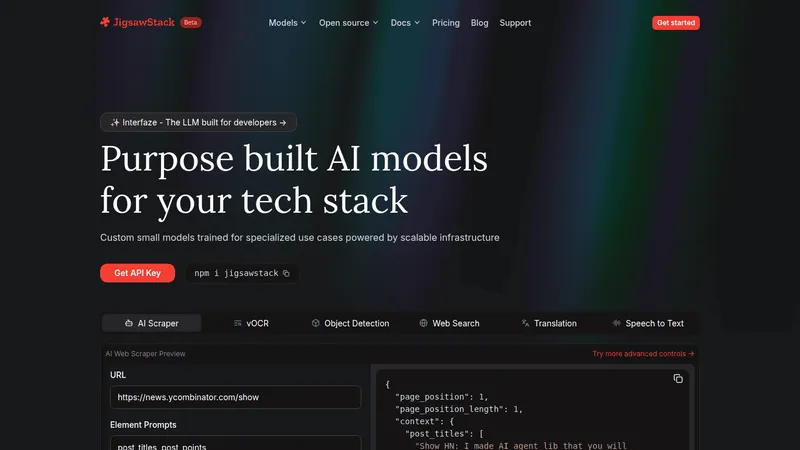
JigsawStack is a platform offering purpose-built AI models for tasks such as web scraping, OCR, translation, speech to text, object detection and sentiment analysis. Developers access the models through API and typed SDKs in several programming languages.
Kie.ai is a unified API platform giving developers access to AI models for video generation, image generation, music creation and chat. It uses a credit-based pricing system and offers a free trial in an API playground.
Prime Intellect is a platform that aggregates GPU compute across data centers for training and running machine learning models, with single-node and multi-node cluster reservations. It also runs decentralized training projects such as INTELLECT-1 and INTELLECT-2 and hosts reinforcement learning environments.
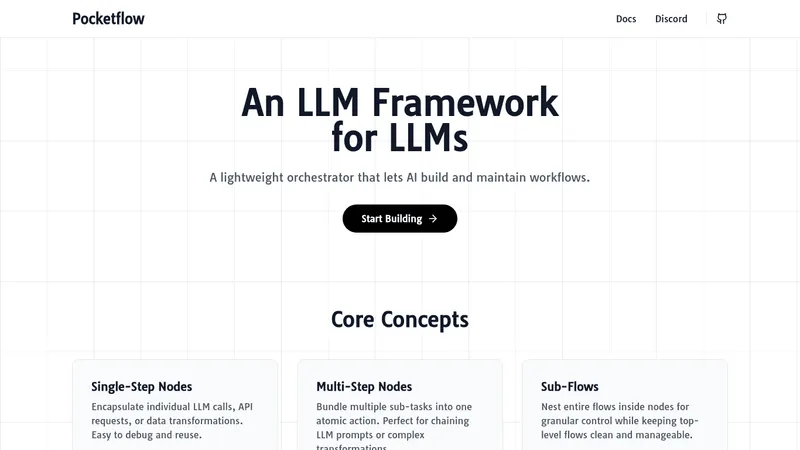
Pocketflow is a framework for orchestrating workflows built around large language model calls, using single-step nodes, multi-step nodes and nested sub-flows. It supports retry logic, batch processing and asynchronous execution for building retrieval-augmented generation and multi-agent systems.
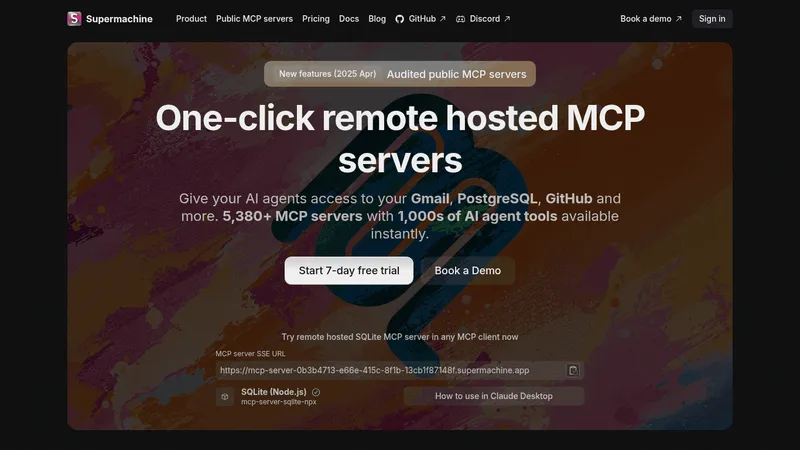
Supermachine is a platform offering one-click, remotely hosted Model Context Protocol (MCP) servers that connect AI agents to services such as Gmail, GitHub and PostgreSQL. It provides access to a public library of over 5,380 MCP servers and supports clients including Cursor, Zed and Claude Desktop.
MCP-B (Model Context Protocol for the Browser) is a framework that embeds MCP servers in web pages so AI assistants can call a site's functionality directly. It uses existing browser sessions for authentication and is distributed as an npm package and a Chrome extension.
Director is an open-source, local-first gateway that connects any LLM to multiple Model Context Protocol (MCP) servers. It includes a CLI for managing proxies and connections, a web studio for configuration, and structured JSON request logging.
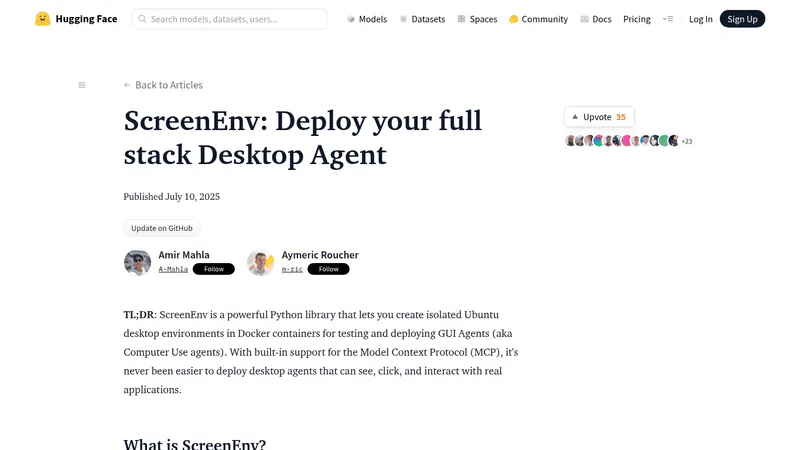
ScreenEnv is a Python library for creating isolated Ubuntu desktop environments inside Docker containers. It lets developers and researchers build and test GUI agents that control the mouse, keyboard, windows, files and terminal, through a Direct Sandbox API or an MCP server.
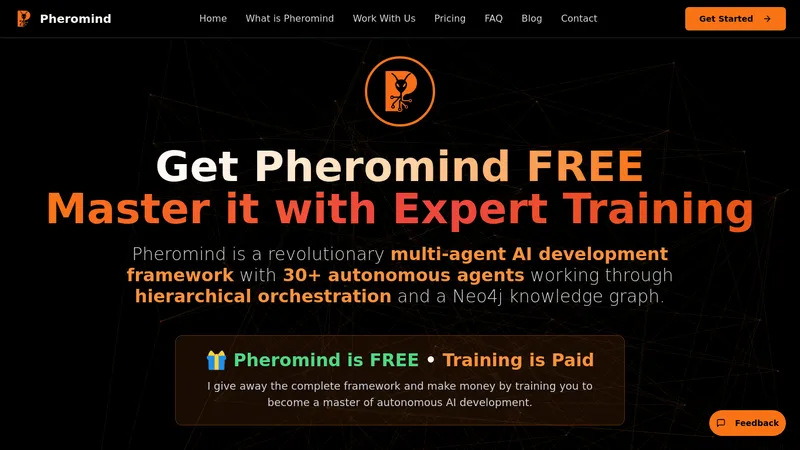
Pheromind is a free multi-agent framework for automating the software development lifecycle, using a hierarchy of over 30 autonomous agents and a Neo4j knowledge graph for persistent project memory. It implements the SPARC methodology, covering specification, pseudocode, architecture, TDD refinement and completion.