Gumloop: AI Automation Framework
Introduction
Gumloop is a no-code platform designed to help users build and host AI-powered business automations. It recently announced a significant funding round, having raised $17 million in Series A funding, which marks a promising step in expanding its offerings and capabilities.
Key Features and Use Cases
Automate Any Workflow
Gumloop enables users to automate workflows effortlessly without requiring coding skills. The platform is designed to cater to a wide range of automation needs, including:
- Web Scraping
- SEO Marketing
- Document Processing
Visual Workflow Building
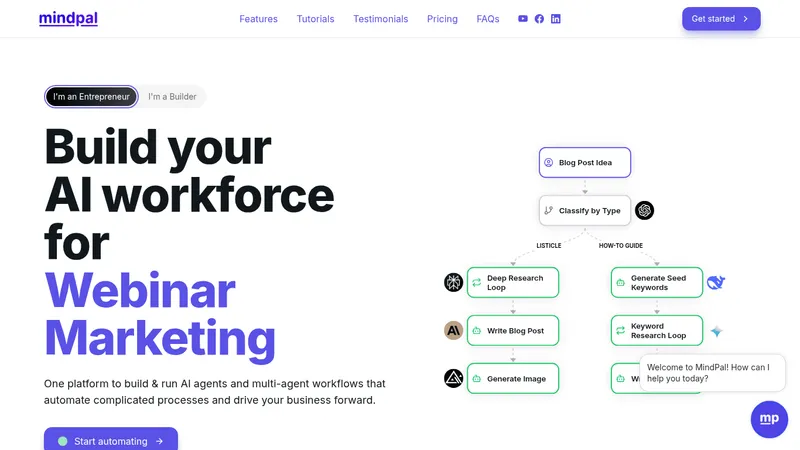
Users can create complex workflows visually by simply dragging and connecting nodes that represent various tasks. If an individual can describe their workflow as a series of steps, they can automate it using Gumloop’s intuitive interface.
Trusted Integrations
Gumloop integrates with a myriad of services, allowing seamless automation involving various data sources. Notable integrations include:
- Major platforms like OpenAI, GitHub, Slack, Salesforce, and Google services.
- Access to ready-made components for advanced AI tasks, such as data extraction and scoring.
These integrations help businesses leverage various tools and services to build comprehensive automation processes efficiently.
Build Custom Automations
One of Gumloop's notable features is the ability to create custom nodes, empowering users to design and deploy unique automation solutions tailored to their specific needs. Users can trigger workflows via multiple channels, including incoming emails and new Slack messages, ensuring that automated processes fit seamlessly into existing business operations.
Scalability and Performance
Gumloop's platform is built to support operations at scale. Users can run millions of nodes without encountering typical restrictions found in competitors' platforms. The parallel execution of workflows enhances efficiency, allowing for tenfold speed improvements in processing tasks.
Community and User Feedback
Gumloop's community plays a vital role in its evolution. Users can access pre-built workflows and templates, enhancing their ability to deploy effective automations quickly. Real feedback from users emphasizes the platform's usability and the significant impact it can have on productivity. Testimonials from users reflect a growing recognition of Gumloop as a game-changing tool, with reports of increased efficiency and productivity in various team environments.
Security Features
For enterprise users, Gumloop prioritizes security and compliance:
- SOC 2 Type 2 & GDPR Compliance: The platform adheres to critical security standards, ensuring user and data privacy.
- Data Confidentiality: Users' data remains untouched for AI training, and comprehensive data processing agreements back this guarantee.
- Advanced Encryption and Access Control: Information is protected with state-of-the-art encryption, and precise user permissions control access to workflows.
Continuous Development
Gumloop is committed to continuous improvement, frequently rolling out new features based on user feedback and competitive market demands. Upcoming updates include enhancements for multi-auth support, new integrations, and more advanced functionality tailored to user needs.
Frequently Asked Questions
Gumloop provides a clear section addressing common inquiries regarding automation capabilities, pricing structures, and collaboration features among users. This allows potential users to understand the platform's full potential and how they can leverage it for their workflows.
Conclusion
Gumloop stands out in the automation landscape by offering a user-friendly, no-code solution for automating a variety of business processes. Its integrations, scalability, and proactive approach to user feedback make it suitable for businesses of all sizes, particularly those looking to improve operational efficiency without extensive IT involvement. With its ongoing development and user-centric focus, Gumloop is positioned to become a leader in the AI automation space.
In summary, Gumloop is beneficial for businesses, teams, or individuals seeking to automate their workflows efficiently, improve data handling, enhance marketing strategies, or streamline document processing tasks—all while requiring minimal technical expertise.