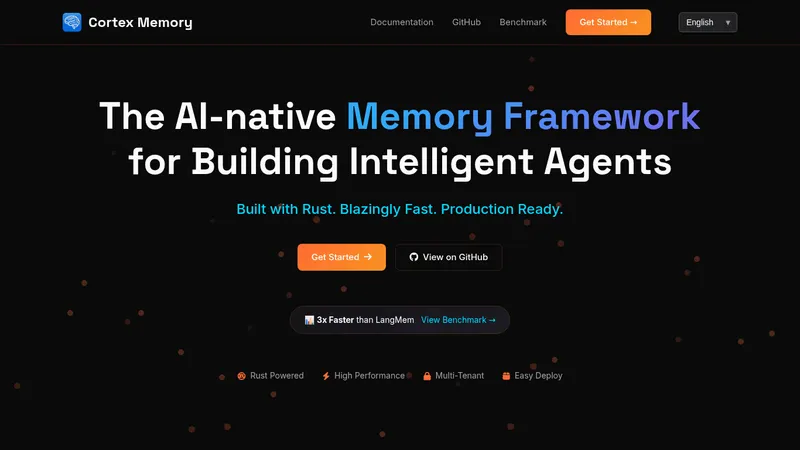
Cortex Memory
sopaco.github.io- Good for
- Builders
- Category
- AI Agents
- Lets you
- Give AI agents memory that persists across sessions
www.agentuity.com
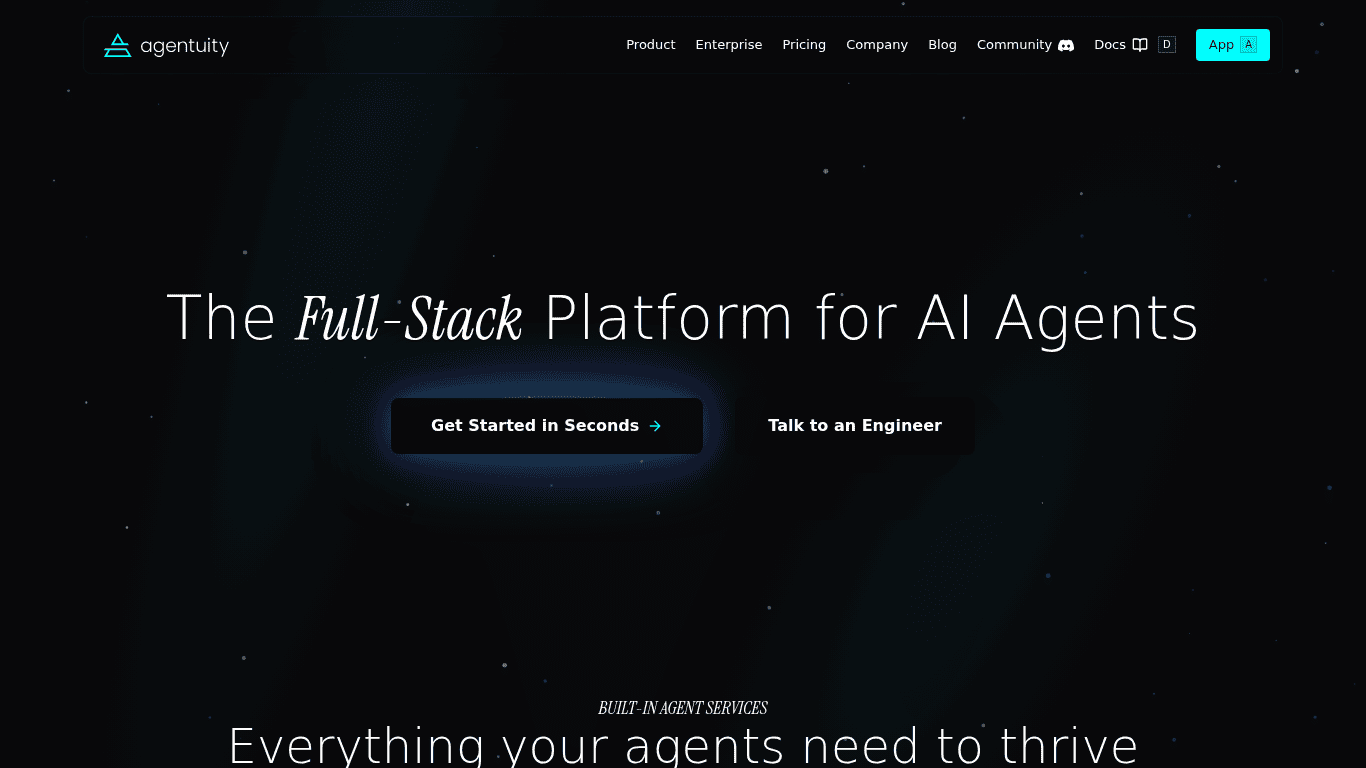
A platform for building, deploying and monitoring AI agents, with built-in APIs, storage and sandboxes.
Visit website (opens in a new tab)Agentuity is a comprehensive platform designed to help developers create sophisticated AI agents efficiently. It provides advanced features such as intelligent routing, persistent state management, and seamless handoffs between different components. With built-in APIs, React frontends, databases, and monitoring capabilities, Agentuity makes it easy to deploy AI agents on various infrastructures including cloud services, virtual private clouds (VPCs), or on-premises systems.
Agentuity emphasizes usability, offering developers the ability to kick-start their projects in mere seconds. This aspect is particularly beneficial for teams needing to rapidly prototype or test new ideas.
Agentuity provides a full suite of essential tools and services that agents require to operate effectively:
APIs: The platform features type-safe Hono routes which auto-generate React hooks. It includes built-in authentication, rate limiting, and OpenAPI documentation, allowing for effortless deployment in a single command.
Frontends: Developers can deploy React applications incorporating end-to-end type safety from their agents to components. This includes built-in features for streaming and real-time updates.
Database & Storage: Agents have access to various storage solutions like Redis, Postgres, vector storage, and object storage, allowing for both ephemeral and persistent data management.
Sandboxes: Agents can run untrusted code in isolated containers, ensuring security and streamlined execution. The platform manages provisioning and cleanup automatically.
Observability: The agent services support automatic tracing, logging, and session-based debugging using OpenTelemetry. This feature provides clear visibility into prompts, responses, and associated costs.
Integrations: Integration with various services can be accomplished within minutes. This encompasses email, SMS, chat platforms, webhooks, cron jobs, and more, enabling agents to connect with minimal configuration.
Evals: Evals can be deployed with agents and tested on live production traffic. Users can view results directly within their traces.
Workbench: During development, users can interact with their agents through chat, testing tools, inspecting state, and debugging in real time without needing to redeploy.
Agentuity wraps existing agent code while providing essential features like observability, evaluations, streaming, and authentication. This integration does not compel developers to adopt a new runtime. Users can utilize any framework or language and call other agents effortlessly.
Example code snippets demonstrate how to create agents with minimal effort. This setup allows for easy management of requests and responses.
Transitioning from code to production is straightforward with Agentuity. The platform alleviates the complexity associated with current cloud providers, managing IAM roles, security groups, and load balancers. Users can initiate production URLs with automated security features simply by pushing updates to GitHub.
Agentuity supports various deployment configurations, making it versatile for different organizational needs:
Agentuity's architecture is tailored for the unique demands of AI agents rather than traditional request-response workloads. It emphasizes long-running runtimes, stateful orchestration, and detailed session-level observability. These features create an ideal environment for deploying autonomous systems like AI agents.
Agentuity positions itself at the forefront of AI agent development. By making it simpler for developers to create and deploy complex AI agents, it aims to reduce the time from idea conception to production rolls out.
Agentuity also provides valuable guides on various topics:
Agentuity represents a significant advancement in the capabilities available to developers working with AI agents. Its robust feature set, combined with user-friendly deployment options and a flexible architecture, makes it an ideal platform for companies and developers eager to harness the power of AI. Whether building simple prototypes or complex production systems, users can rely on Agentuity to facilitate faster development, improved performance, and seamless integration between components. Anyone involved in artificial intelligence development—from startups to larger enterprises—will find immense value in what Agentuity offers.
Ready to try it? Visit www.agentuity.com (opens in a new tab)