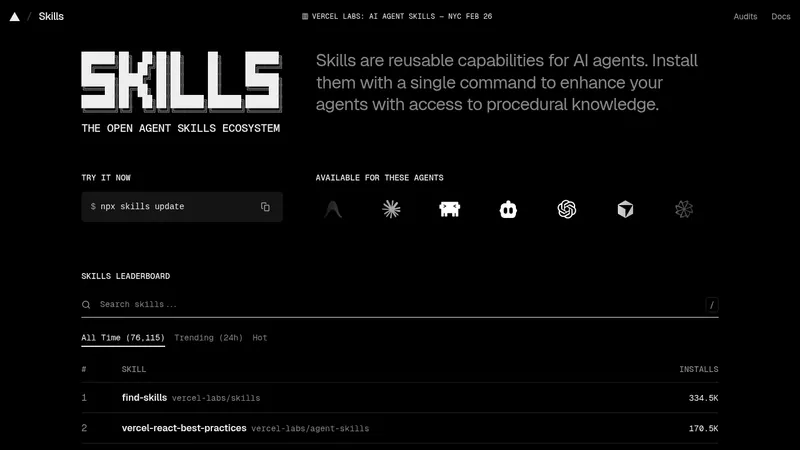
A platform for discovering and installing reusable skills that extend AI agents such as Claude Code, Cursor and Codex. Skills are added with a single command, and a leaderboard ranks skills by install counts.
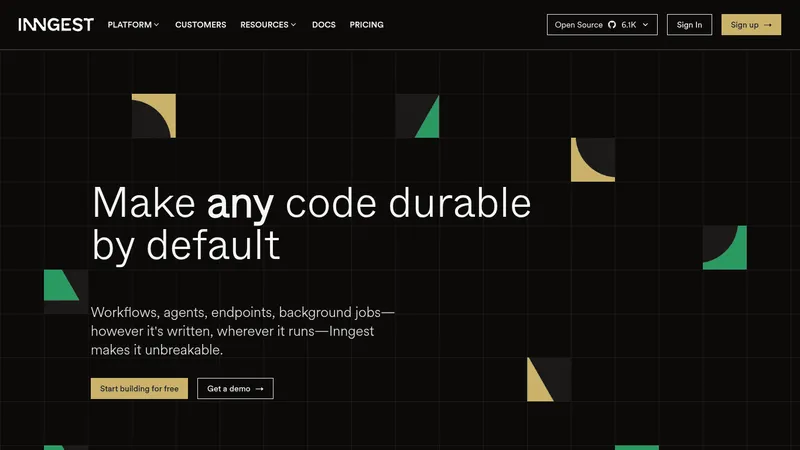
Inngest is a platform for building durable multi-step backend workflows and AI orchestration. It handles queues, state management, scheduling, retries and observability so developers can write multi-step functions that run in serverless, edge or traditional environments.
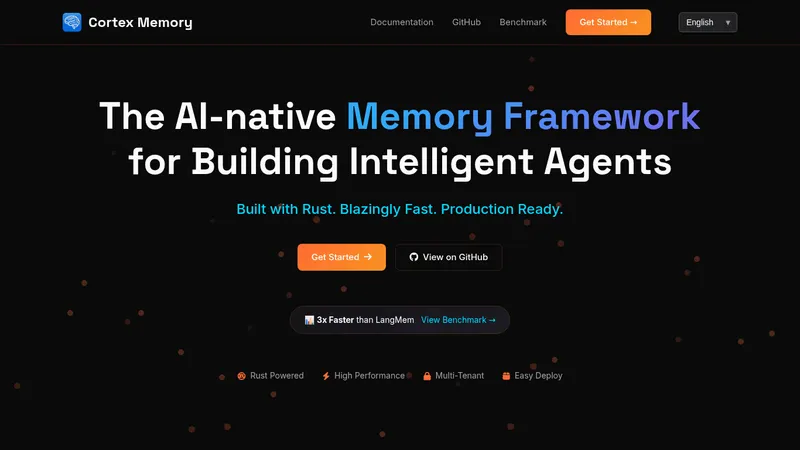
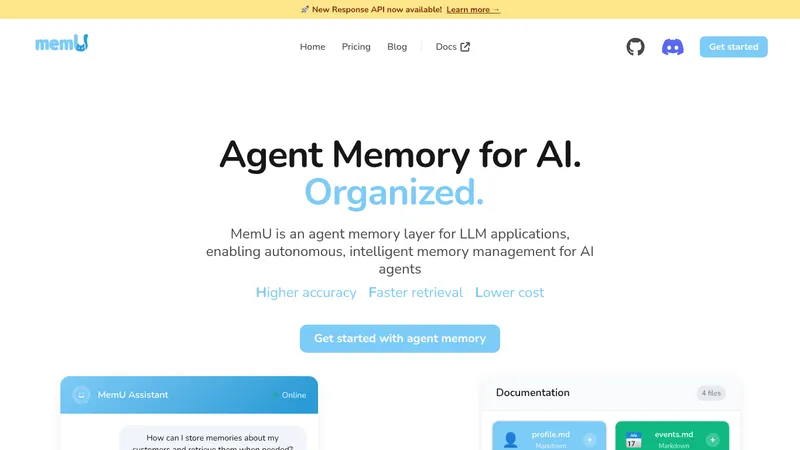
MemU is an agent memory platform for large language model applications that manages, organizes and retrieves long-term memories for AI agents. It offers Python and JavaScript SDKs and a REST API for integration into existing LLM applications.
Toolhouse is a platform for building AI agents from natural language prompts or templates and deploying them to production with one click. It offers built-in integrations with services such as scrapers, retrieval-augmented generation and MCP, plus dedicated sandboxes for testing each agent.
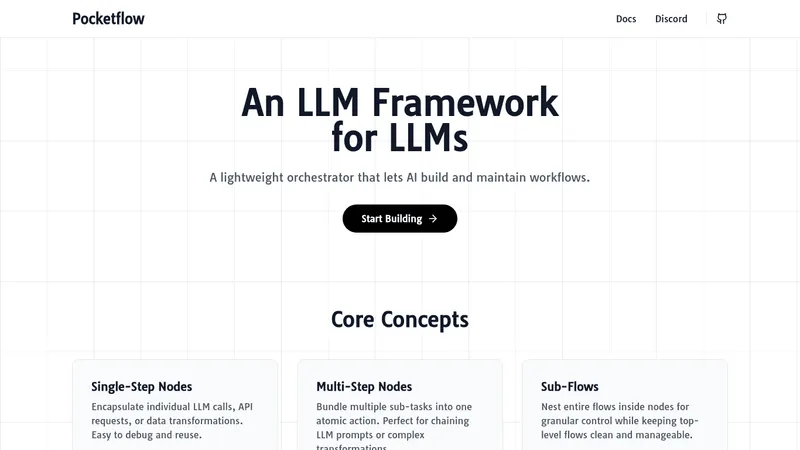
Pocketflow is a framework for orchestrating workflows built around large language model calls, using single-step nodes, multi-step nodes and nested sub-flows. It supports retry logic, batch processing and asynchronous execution for building retrieval-augmented generation and multi-agent systems.
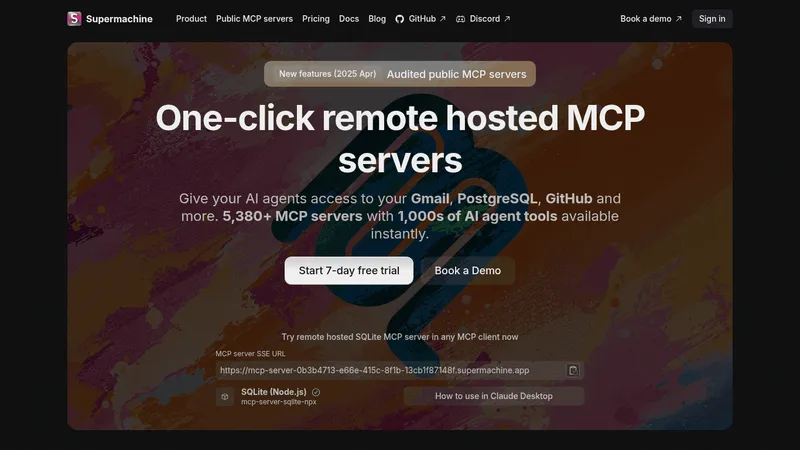
Supermachine is a platform offering one-click, remotely hosted Model Context Protocol (MCP) servers that connect AI agents to services such as Gmail, GitHub and PostgreSQL. It provides access to a public library of over 5,380 MCP servers and supports clients including Cursor, Zed and Claude Desktop.
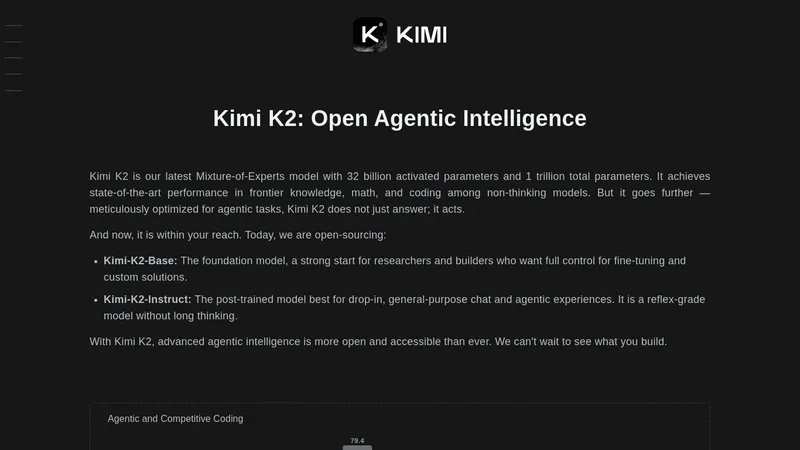
Kimi K2 is an open-weight Mixture-of-Experts language model with 1 trillion total parameters and 32 billion activated, optimized for agentic tasks such as tool use, coding and mathematics. It is offered in Base and Instruct versions with an OpenAI and Anthropic compatible API.
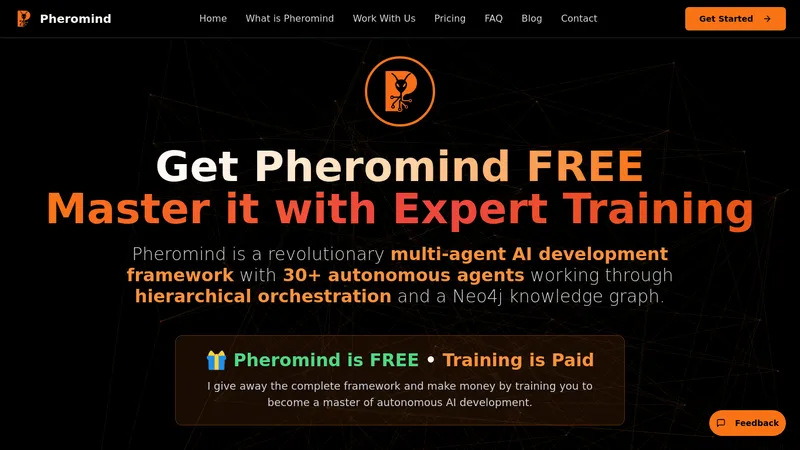
Pheromind is a free multi-agent framework for automating the software development lifecycle, using a hierarchy of over 30 autonomous agents and a Neo4j knowledge graph for persistent project memory. It implements the SPARC methodology, covering specification, pseudocode, architecture, TDD refinement and completion.
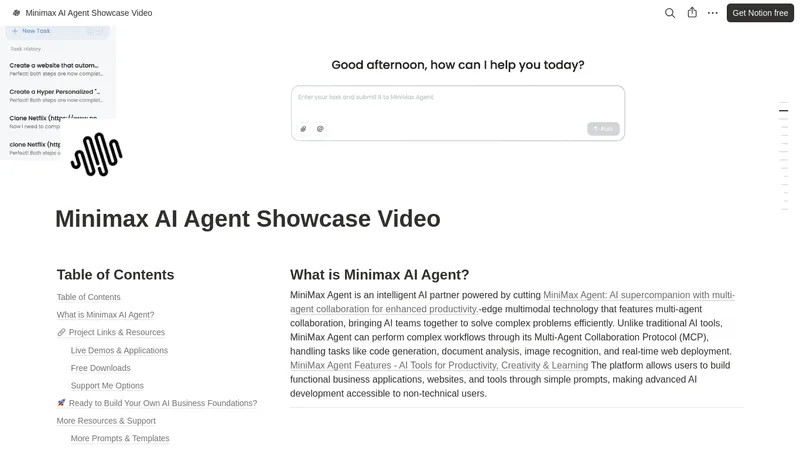
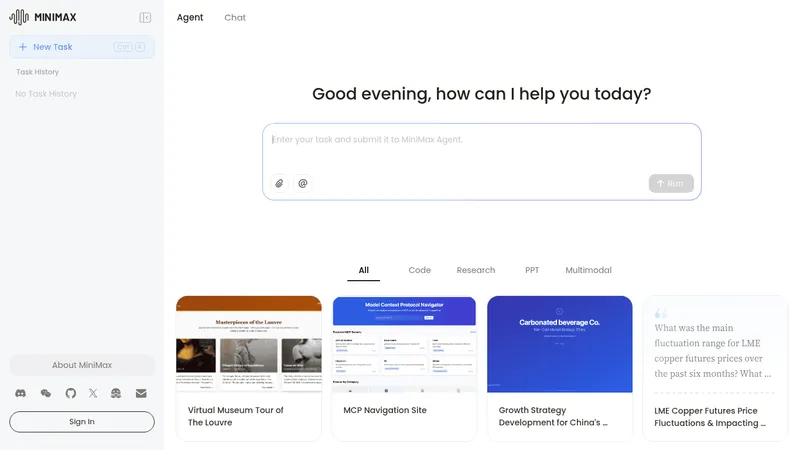
MiniMax Agent is a multi-agent AI system that splits complex tasks across collaborating agents. It can generate code, analyze documents, recognize images and deploy web applications from text prompts.
MiniMax Agent is an AI agent platform that executes user tasks such as code generation, research, presentation creation, citation verification, market analysis and creative work like podcasts and picture books. It is aimed at students, professionals, creators and market analysts.
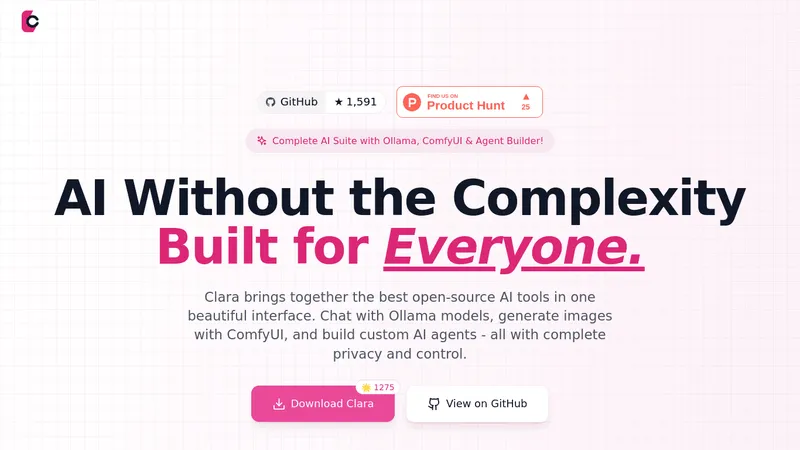
Clara is a desktop AI assistant and agent builder that runs offline and integrates chat with Ollama-compatible models, Stable Diffusion image generation via ComfyUI, and a node-based editor for building custom agents. It is available for Windows, macOS and Linux.
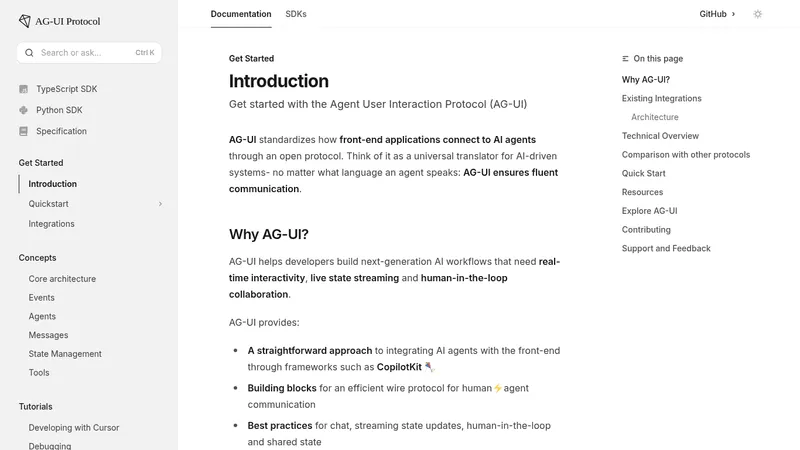
AG-UI is an open, event-driven protocol that standardizes how front-end applications communicate with AI agents. It supports real-time streaming of state updates, human-in-the-loop interaction and transports such as SSE, webhooks and WebSockets.
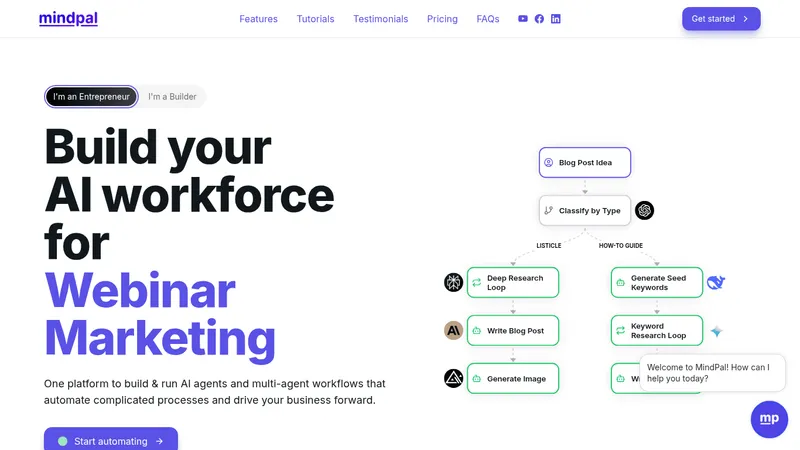
MindPal is a platform for building specialized AI agents and multi-agent workflows that automate business tasks. Agents can be trained on user data, connected to existing business tools, and run internally or published for public access.
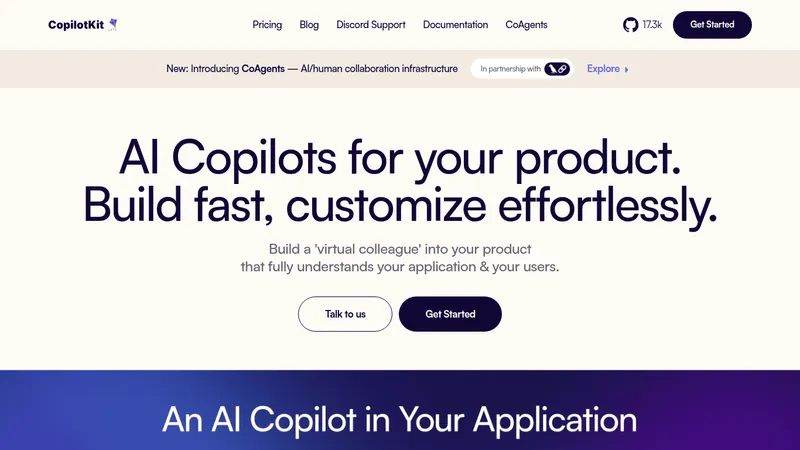
CopilotKit is a platform for embedding AI copilots into software products, with prebuilt React components such as CopilotChat and CopilotPopup. It lets developers give copilots access to application data, allow them to perform actions, and support agents built with LangChain and LangGraph.
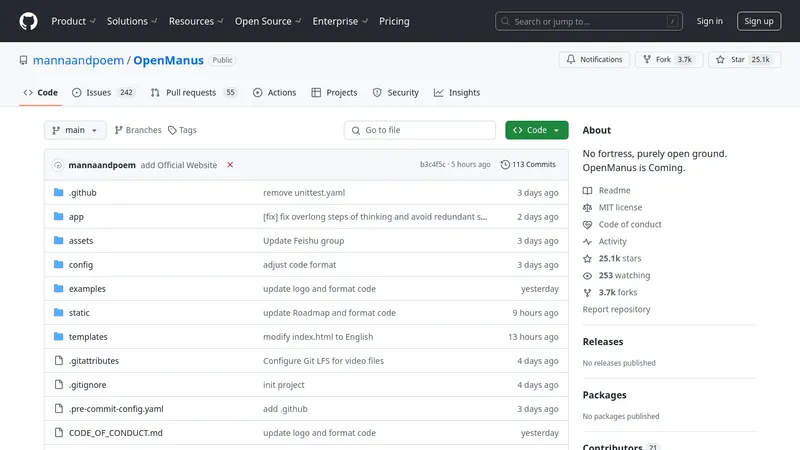
OpenManus is an open-source framework for building AI agents, developed by contributors from the MetaGPT community. It provides installation via conda or uv, a configuration file for LLM settings and API keys, and a command-line entry point to start custom AI applications.
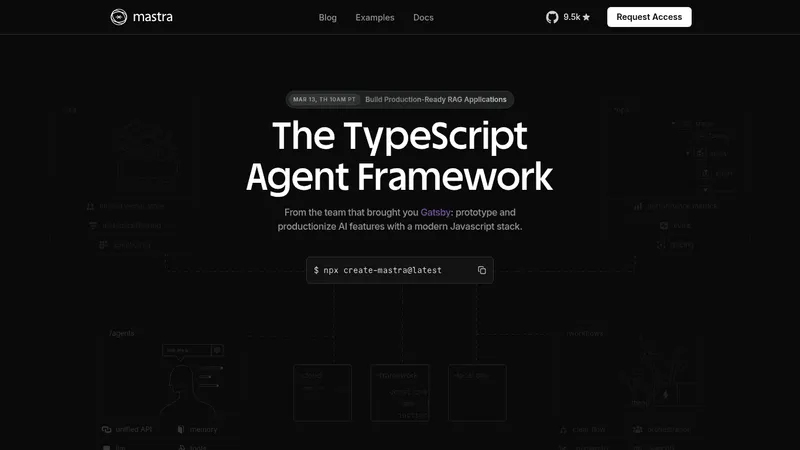
Mastra is an open-source TypeScript framework for building and deploying AI agents, workflows, and applications. It provides tools for agent creation, memory, tool calling, RAG, and evaluation within a JavaScript/TypeScript stack.
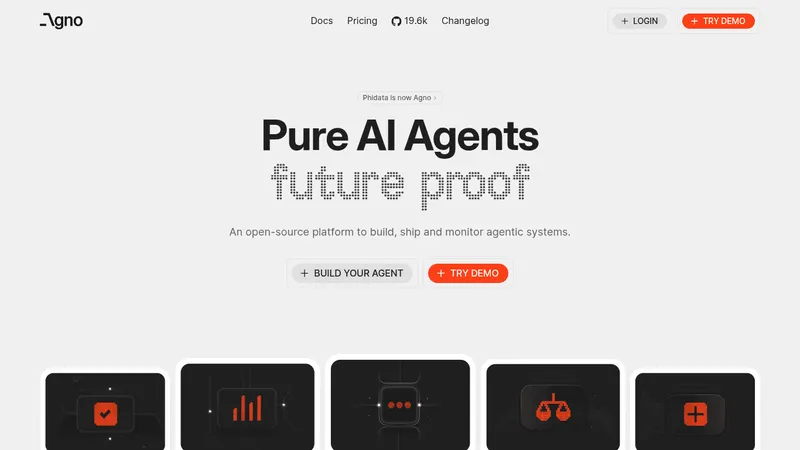
Agno is an open-source platform for building, deploying and monitoring agentic systems. It lets developers attach models, tools and knowledge bases to agents, with built-in memory and monitoring of token use and output quality.